A Few Pieces of Plastic Can Kill a Seabird. Now We Know Exactly How Few.
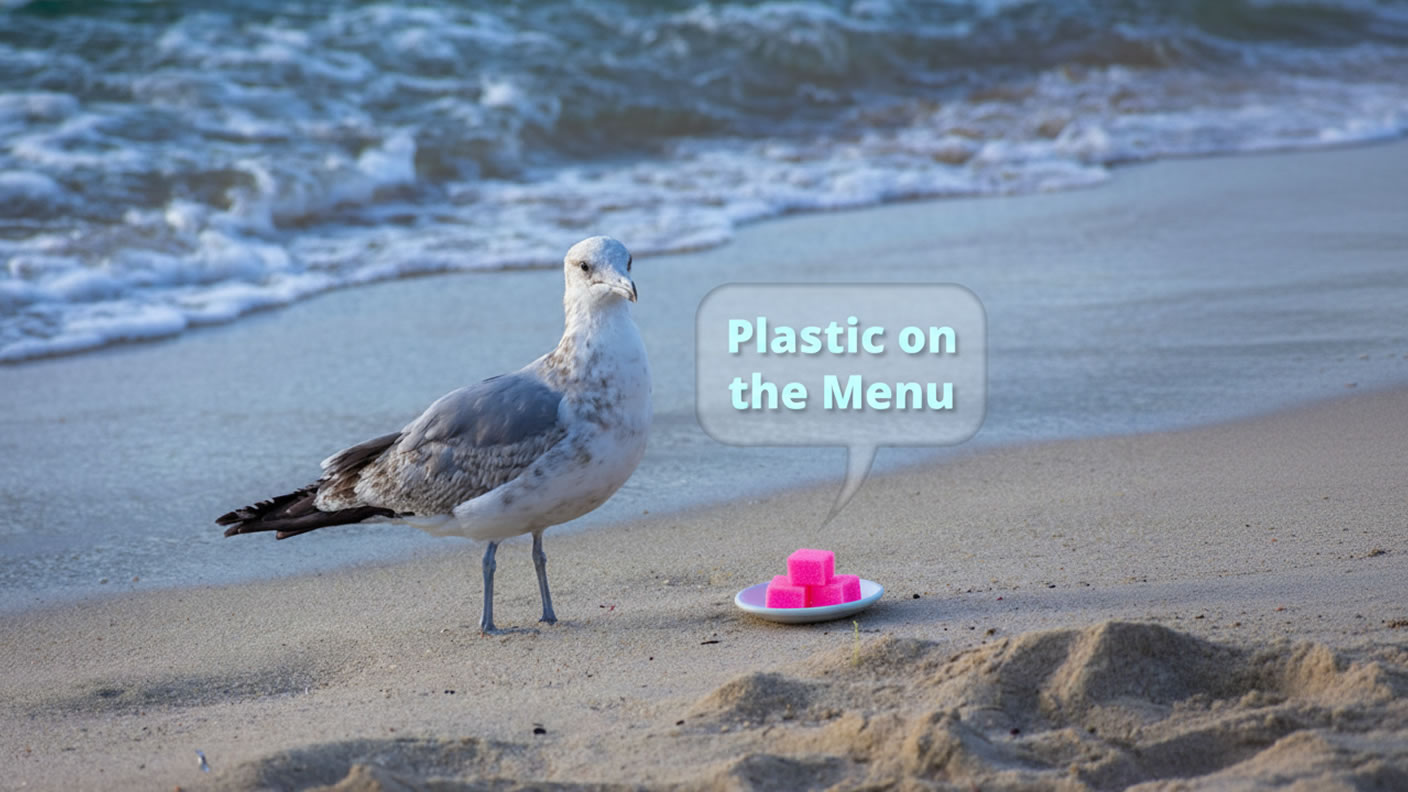
Picture a puffin. Compact, vivid, built for the open ocean. Now picture three sugar cubes. That volume of plastic, according to peer-reviewed research published last November in the Proceedings of the National Academy of Sciences, gives an Atlantic puffin a 90% chance of death. (Ocean Conservancy, November 2025)
The study, led by Dr. Erin Murphy of Ocean Conservancy in collaboration with researchers at the University of Toronto, the Federal University of Alagoas, and the University of Tasmania, is the most comprehensive mortality risk assessment for macroplastic ingestion ever conducted. The team compiled necropsy data from more than 10,000 seabirds, sea turtles, and marine mammals. Each case included documented cause of death and data on plastic ingestion. From that, researchers modeled the relationship between what an animal had swallowed and how likely it was to die. (PNAS, November 17, 2025)
The findings are receiving renewed attention in California this spring, and for good reason.
What the Numbers Show
The lethal thresholds vary by species, size, and plastic type, but they are consistently smaller than most people expect. A loggerhead sea turtle faces a 90% chance of death after ingesting roughly two baseballs’ worth of plastic. For a harbor porpoise, a soccer ball’s worth. At the 50% mortality threshold, the numbers are smaller still: less than one sugar cube for an Atlantic puffin, less than half a baseball for a loggerhead turtle. (Ocean Conservancy press release, November 2025)
Plastic type matters too. Seabirds are especially vulnerable to synthetic rubber. Balloon fragments are the primary culprit. Six pea-sized pieces carry a 90% chance of killing a seabird. For marine mammals, lost fishing gear poses the greatest risk. As few as 28 tennis-ball-sized pieces could kill a sperm whale. Sea turtles, which can weigh several hundred pounds, are most threatened by soft plastics like bags and food wrappers. (The Invading Sea, December 2025)
How the plastic kills depends on what it is. Hard fragments puncture or tear internal organs. Soft plastics and rubber items can cause torsion, a lethal twisting of the digestive tract. Even without immediate trauma, a gradual accumulation of plastic can obstruct the gut entirely, leading to starvation. (NBC Palm Springs, April 24, 2026)
These are not edge cases. The study found plastic in nearly half of all sea turtles examined, in over a third of seabirds, and in 12% of marine mammals. One in five of all the dead animals in the dataset had ingested plastic. Nearly half of the species represented are on the IUCN Red List. As Murphy noted: “Their populations are already at risk, and plastic ingestion is another thing that is impacting these already stressed species.” (Mongabay, November 2025)
The study was selected for the Cozzarelli Prize, awarded to just six papers out of more than 3,600 published in PNAS in 2025. It was recognized as the top paper in Applied Biological, Agricultural, and Environmental Sciences. (Ocean Conservancy)
California’s Coast Is Not Insulated
Every species named in the study is present along the California coast. Puffins nest and forage in Northern California waters. Loggerhead and leatherback sea turtles migrate through the Pacific, feeding offshore. Harbor porpoises are year-round residents of the California coast. Gray whales and humpbacks pass through seasonally. The items most dangerous to them, fishing gear fragments and soft plastics, are among the most commonly found debris in California beach cleanups. (El Observador, May 1, 2026)
That plastic reaches those animals through California’s rivers as much as its beaches. Stormwater systems in urban areas carry food wrappers, foam, plastic bags, and synthetic fibers from city streets into watersheds that drain directly to the Pacific. The California Ocean Protection Council has identified stormwater runoff as a primary pathway for plastic into coastal waters. No individual cleanup will fully solve that. Individual cleanups can still meaningfully address it. (OPC Statewide Microplastics Strategy)
Turning the Science Into a Tool
Ahead of Earth Month in March 2026, Ocean Conservancy launched the Wildlife Impact Calculator at WildlifeImpactCalculator.org. The free tool is built directly on the PNAS research. A volunteer enters what they picked up during a cleanup: bottle caps, straws, plastic bags, fishing debris, balloons. The calculator then outputs how many animals would have been at risk had those items been ingested. (Ocean Conservancy, March 23, 2026)
The tool covers more than 20 categories of plastic pollution. Log 25 bottles, 70 cigarette butts, and 15 food wrappers, and the calculator tells you five sea turtles were protected. (Good Good Good, March 2026) “We hope that people really see that beach cleanups matter,” Murphy said. (Fast Company, March 23, 2026)
The researchers are careful about what the calculator does not claim. Macroplastic ingestion is one pathway of harm. It does not account for entanglement, microplastic ingestion, or the chemical toxins that leach from plastic once it enters seawater. The numbers are likely an undercount of the total threat. (Ocean Conservancy, March 2026)
Where Individual Action Meets Policy
California enacted Senate Bill 1053 on January 1, 2026, closing a loophole that had allowed thicker “reusable” plastic bags to remain at grocery checkouts despite the state’s earlier bag ban. And on May 1, the permanent regulations for SB 54 took effect, beginning the process of holding plastic producers financially accountable for what ends up in the environment. (NBC Palm Springs, April 24, 2026)
The research makes a case for both. Straws, wrappers, bottle caps, balloons, and fishing line are among the most commonly recovered items in California beach cleanups. They are also the items the PNAS study identifies as lethal in small quantities. Removing them from beaches and waterways before they reach the ocean is a direct intervention for the species that live there. Preventing them from being produced at the scale they currently are is how the math eventually changes.
If you want to see what your next cleanup is worth to the animals on this coast, start here.
Photo credit: Israel Torres (based on an image from Pexels)