
The Label Lied. California Just Did Something About It.
You’re standing in the grocery aisle. You pick up a bottle, a container, a package. There it is, that little claim printed right on the label: Made with recycled content. Maybe it even has a number. 30%. 50%. You put it in your cart. You feel, if not good exactly, then at least less bad.
Here’s what you probably didn’t know: in many cases, that claim is a fiction. Not a rounding error. Not a technicality. A fiction enabled by a bookkeeping trick so convoluted that even people who work in the packaging industry argue about it at conferences.
And here’s the good news: on May 28, 2026, the California State Assembly voted 42-19 to call it what it is.
The Ocean Doesn’t Care About Your Accounting
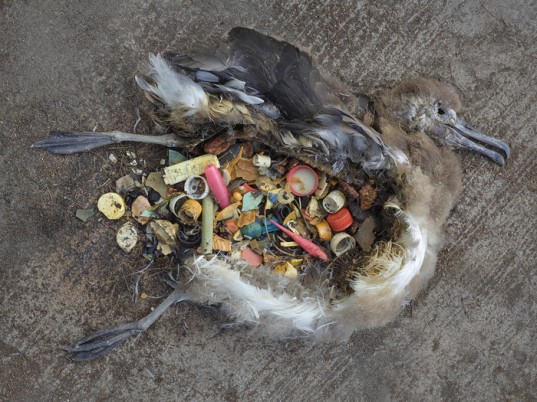
For anyone working to keep plastic out of our oceans and off our coastlines, the recycling story has always been complicated. We know the statistics. We know that the vast majority of plastic ever produced has never been recycled, that it persists in the environment for centuries, that it breaks into microplastics moving through the food chain from zooplankton to albatross to us. We know that the promise of recycling has, in many ways, functioned as a permission slip for producing more plastic in the first place.
So when a product claims to contain recycled material, that claim matters. It’s supposed to mean that plastic was pulled back from the waste stream, prevented from reaching a landfill, an incinerator, or the ocean, and turned back into something useful. That’s the deal. That’s what the label implies. That’s what consumers think they’re buying.
The problem is that for a growing number of products, that isn’t true.
The Shell Game
To understand how this happened, you need to understand something called mass balance accounting. Bear with us. It sounds like an auditing concept, and it is, but the implications are anything but dry.
Imagine a factory that makes plastic packaging. In goes a mix of materials: some virgin plastic, freshly made from fossil fuels, and some recycled plastic, recovered from post-consumer waste. Those materials get blended together in the production process. Once they’re mixed, you genuinely cannot tell them apart. Not by looking, not by chemical analysis.
So far, so reasonable. Here’s where it goes sideways.
Under mass balance accounting rules, that factory doesn’t have to track which recycled material ended up in which product. Instead, it can take the total amount of recycled input that entered the facility and allocate it however it likes across the output. It could designate a small run of products as “100% recycled content” and sell the rest as containing nothing, even though every single product that came off the line is physically identical. Or it could sell those recycled-content credits to an entirely different company in a completely different supply chain, which then stamps “made with recycled material” on its own product, even though no recycled plastic ever came within miles of it.
This is what Nick Lapis, Director of Advocacy at Californians Against Waste, meant when he said companies are “hiding behind a bookkeeping gimmick.” The recycled content exists somewhere in the global supply chain, in theory. It’s just not in the product you’re holding. The label isn’t describing your bottle. It’s describing a spreadsheet.
The plastics industry argues this is a necessary and legitimate approach, especially for chemical recycling processes where materials are genuinely broken down and recombined at a molecular level. Their position is that tracking physical content through a complex industrial system is impractical, and that credits certified by third-party systems like ISCC are a reasonable proxy.
What they don’t mention is that those certifications verify the bookkeeping. Not the bottle.
What California Did, and How We Got Here
Assembly Bill 2253, the Protecting Consumers Against Greenwashing Act, does something elegantly simple: if you want to claim your product contains recycled content, the recycled material has to actually be in the product.
Here’s how the bill got to where it is today:
- February 11, 2026 – The federal Recycled Materials Attribution Act is introduced in the U.S. House, a bipartisan bill that would legitimize mass balance accounting nationwide and direct the FTC to update its environmental marketing guidelines accordingly.
- February 19, 2026 – Eight days later, Assemblymember Tasha Boerner (D-Encinitas) introduces AB 2253, sponsored by Californians Against Waste, as a direct counter. The bill requires that recycled content claims reflect actual physical content in the product, and explicitly prohibits mass balance, book-and-claim, and free allocation accounting methods.
- March 9, 2026 – The bill is referred to the Assembly Committee on Natural Resources.
- April 13, 2026 – AB 2253 is heard in the Natural Resources Committee and advances.
- May 2026 – The bill clears the Assembly Appropriations Committee.
- May 28, 2026 – AB 2253 passes the full California Assembly, 42-19, and heads to the State Senate.
That 42 to 19 vote is worth pausing on. It was described by advocates as a nail-biter. The opposition, led by the plastics and chemical industries, lobbied hard to kill it. The fact that it passed, and passed with a real majority, is a meaningful signal.
The bill also builds on a foundation California has been constructing for years. AB 1305, signed by Governor Newsom in 2023, tackled greenwashing in the carbon offset market, requiring companies making carbon-neutral claims to actually back them up. SB 343, taking effect later this year, restricts which products can use the recycling symbol and recyclability claims. AB 2253 closes the loop on recycled content, completing a trio of laws that together make California’s environmental marketing standards the most demanding in the country.
Why This Matters Far Beyond California
California has roughly 39 million people and the fifth-largest economy in the world. When California sets a standard, companies that sell nationally tend to follow it. Not because they have to everywhere, but because maintaining two different supply chains and two different labeling systems is expensive and complicated. This is sometimes called the California Effect, and it’s real.
If AB 2253 becomes law, companies selling into California will face a clear choice: put actual recycled material in your products, or stop making recycled content claims. For a national brand, that decision doesn’t stay inside California’s borders.
There’s another dimension here for the ocean plastics community specifically. Mass balance accounting has been a key enabler of so-called advanced or chemical recycling, industrial processes that break plastic back down into chemical feedstocks. Proponents say this is the future of recycling for hard-to-process plastics. Critics, including the NRDC and many environmental organizations, argue that much of what’s being called chemical recycling is closer to incineration, that yields of actual recycled material are far lower than advertised, and that the credit schemes built around it paper over continued production of virgin plastic. AB 2253 doesn’t resolve that debate. But it does mean that whatever is happening in those facilities, the product on the shelf has to actually contain the output. Not just a certificate saying the output existed somewhere.
Less greenwashing means less social license for plastic production. Less social license means more pressure for real reduction. And real reduction is what keeps plastic out of the water.
The Threat on the Horizon
We’d be doing you a disservice if we didn’t mention the risk.
The federal Recycled Materials Attribution Act was introduced in the House just days before AB 2253 was filed. It explicitly includes a preemption clause. That means if it passes, it would override state laws, including California’s, that set stricter standards. The bill is currently pending before the House Energy and Commerce Committee, backed by the Consumer Brands Association, the American Chemistry Council, and major industry groups.
It has not yet passed. It may not pass. But it represents a direct attempt to lock in mass balance accounting as federally acceptable and to prevent states from doing what California is trying to do. Anyone who cares about AB 2253 should be watching that bill with equal attention.
What Happens Next, and What You Can Do
AB 2253 now moves to the California State Senate, where it will be heard first by the Senate Environmental Quality Committee. The same industry opposition that made the Assembly vote a nail-biter will show up again. The Senate is where California bills frequently die. The window is this summer.
The most useful thing you and your organization can do right now is contact California State Senators, particularly those on the Environmental Quality Committee, and make clear that the ocean plastics community is watching this bill and wants to see it pass. Letters and calls from outside California still matter. National and international pressure on environmental legislation in the state has moved votes before.
You can also amplify. Share this story. Explain the mass balance trick to people who haven’t heard of it. The more widely understood this practice becomes, the harder it is for industry lobbying to happen in the dark.
The label has been lying for a while. California is trying to make that stop. The least we can do is help it get there.
AB 2253 was authored by Assemblymember Tasha Boerner (D-Encinitas) and is sponsored by Californians Against Waste. To learn more about the bill or find your California State Senator, visit leginfo.legislature.ca.gov or findyourrep.legislature.ca.gov.
Resources
- The Bill AB 2253 Full Text, California Legislative Information Read the bill as introduced, including the specific language prohibiting mass balance and book-and-claim accounting.
- The Sponsor Californians Against Waste: AB 2253 Press Release The sponsoring organization’s announcement and background on why the bill was introduced.
- The Author Assemblymember Tasha Boerner, 77th District Assemblymember Boerner’s legislative page, including her full 2026 bill portfolio.
- Contact Your California State Senator Find Your Representative, California Legislature AB 2253 now moves to the State Senate. Use this tool to find and contact your California State Senator directly.
- The Federal Counter-Bill Recycled Materials Attribution Act (H.R. 7502), GovInfo The federal bill that would preempt state laws like AB 2253 and legitimize mass balance accounting nationally. Worth knowing about.
- Background Reading Does This Packaging Contain Recycled Plastic? Inside the Mass Balance Debate, Packaging Dive A solid overview of the mass balance debate from an industry publication, useful for sharing with people who want to go deeper.